Publish Your Research with Gnoscience Journals
High-quality, peer-reviewed open access journals across medical, life sciences, and engineering disciplines.
Submit Your ManuscriptFeatured Journal

Case Reports and Reviews: Open Access
- Rapid peer review
- DOI assigned
- Open access publication
- Indexed in Google Scholar & Crossref
Explore Our Open Access Journals
Browse our peer-reviewed journals across medical, life sciences, and interdisciplinary fields.



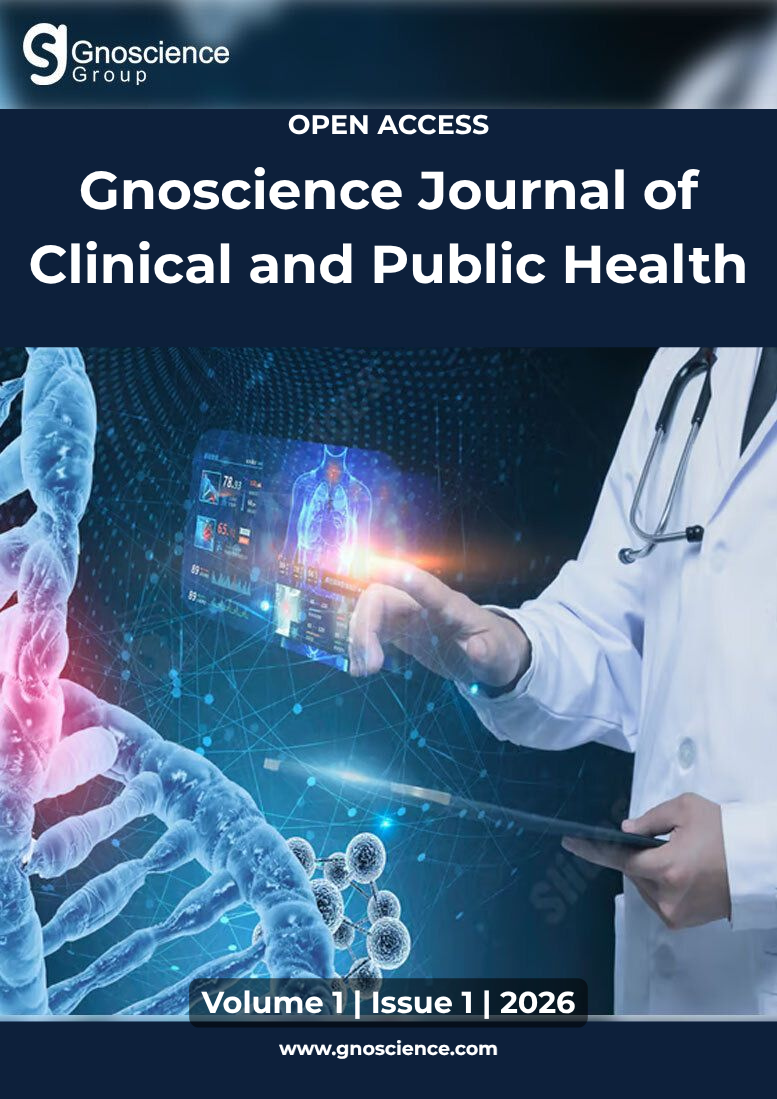
Call for Papers
We invite researchers and scholars to submit original manuscripts for peer review and publication across all our journals.
We particularly encourage submissions that highlight:
- Original research contributions across all disciplines
- Novel findings and methodologies
- Systematic and narrative reviews
- Case reports with clinical significance
- Interdisciplinary studies
Our journals aim to rapidly publish clinically relevant findings to support evidence-based practice and global knowledge sharing.
Welcome To Gnoscience Group
Latest Published Articles
Why Publish with Gnoscience
Experience a fast, transparent, and high-quality publishing process across all our journals.
Peer-Reviewed Process
Rigorous and transparent peer review ensuring quality research.
Open Access Publishing
Freely accessible research for global visibility.
Rapid Review Timeline
Efficient editorial process with timely decisions.
Global Readership
Reach researchers, clinicians, and academics worldwide.
Experienced Editorial Board
Guided by international experts across disciplines.
Author-Friendly Process
Smooth submission, clear communication, and editorial support.